jaw, face & Neck Pain
TMJ & Jaw Pain Treatment in Barrie
I’m Sandra McCarthy, a Registered Massage Therapist in Barrie. I treat jaw pain, TMJ/TMD, facial pain, and the headaches and neck tension that often come with them.
My approach is gentle and hands-on. When tight muscles can’t be reached from outside, it includes careful work inside the mouth. I assess how your jaw, face, head and neck work together and treat the strain wherever it starts. Your first visit begins with that assessment, and treatment starts the same day.
Does this sound like you?
Your jaw hurts. Maybe it clicks when you eat, or you wake up with headaches that seem to start right around your temples. You might have noticed your neck is always tight, no matter how many times you stretch it. Or perhaps you left the dentist’s office after a long cleaning and couldn’t shake the ache for days.
You might also notice:
- Tension in your chewing muscles that never quite lets go
- Pain in your jaw when you eat or talk
- Clicking, popping or grinding sounds when you open your mouth
- Headaches, especially after holding your mouth open for a while
- Trouble opening your mouth wide enough to fit three knuckles stacked on top of each other
- Sounds when you swallow, or a feeling that food gets stuck partway down
- A stiff neck that won’t loosen up
Jaw pain, facial tension, neck stiffness and headaches are often connected. If several of these sound familiar, the cause may reach beyond your jaw.
Why jaw pain can be hard to shake
Your jaw doesn’t work on its own. The bones of your head, face, jaw and neck fit closely together. Fascia, the connective tissue that wraps every muscle and bone, links them. When one area is pulled slightly out of line, the others feel the strain.
That strain can start in several places:
- A fall, or a blow to your face or head
- A joint in your neck that’s out of alignment
- The bones of your face and head, or the jaw joint itself
- Sometimes an imbalance as far away as your pelvis
An injury can also leave your nervous system on guard long after the danger has passed. While it stays on guard, your muscles and connective tissue stay tight. Part of my work is helping your nervous system settle so the tension can let go.
What happens at your appointment
Assessment
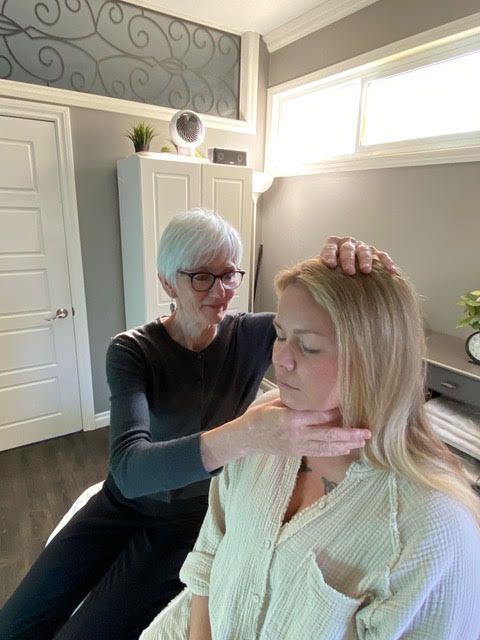
I ask about your symptoms and your history, including any injuries to your face, head or neck. Then I check how your jaw, face, head, neck and posture are working together. What I find decides where treatment starts.
Treatment
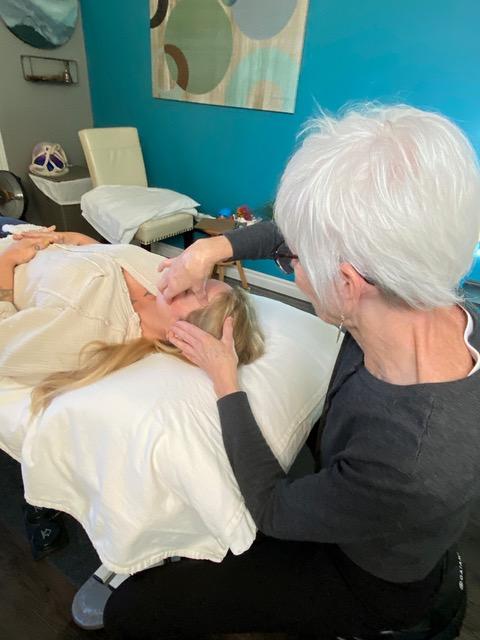
You lie on a comfortable treatment table, fully clothed. The touch is light. Depending on what I find, I may:
- Use cranial techniques to ease subtle twists in the bones of your head, face and jaw
- Use Strain Counterstrain to reset tension in the blood vessels and lymph vessels of your face and neck
- Release tight connective tissue that anchors and links these structures
- Work inside your mouth with a gloved finger, to reach tight jaw muscles and ease strain in the roof of your mouth. I always explain what I’m doing and ask your permission first.
How it feels
You might feel warmth, tingling, or a sense of release during treatment. Some people notice their jaw relaxing in real time. Others leave feeling lighter in their neck and head, like a weight has been lifted. And yes, some people fall asleep—that’s perfectly fine too.
Cost and insurance
A 60-minute session is $__.
As a Registered Massage Therapist, I provide receipts you can submit to your extended health plan.
You don’t need a doctor’s referral to book. Some insurance plans ask for one before they’ll pay for massage therapy, so check your plan.
Your therapist: Sandra McCarthy, RMT
Every appointment is with me. I’ve been a Registered Massage Therapist since 1990, and I taught at the Sutherland-Chan School from 1993 to 2000. My techniques for the jaw, face and inside the mouth come from postgraduate training in cranial therapy. Read More…

Training that applies to jaw, face and neck pain:
- Cranial Therapy Series 1 to 4, which include specific techniques for the jaw, face, head and inside the mouth
- CranioSacral Therapy 1 and 2 (Upledger)
- Strain Counterstrain, levels 1 and 2
- The Lymphatic System, levels 1 to 3
- Myofascial Release and Fascial Dynamics Manual Therapy (FDMT)
- Honours Bachelor of Physical Education, Lakehead University
- Registered Massage Therapist, Sutherland-Chan School and Teaching Clinic (1990)
- Member of the College of Massage Therapists of Ontario
Questions about jaw pain treatment
What does intraoral work feel like?
I wear gloves and use one finger to press gently on tight muscles inside your mouth. It can feel a bit unusual at first. Many clients find it deeply relieving once they feel how much tension lives along the jaw and at the base of the tongue. I go at your pace, and you can ask me to stop at any time.
Is the treatment painful?
The treatment is gentle. The touch is light, with no forcing or aggressive manipulation. Some people are surprised by how subtle it is.
How many sessions will I need?
It depends on what’s behind your pain. Some people notice changes after the first session. For others, the changes unfold over a few sessions. [Sandra: after the first visit, do you tell the client what you recommend? If so, add: “After your first visit, I’ll tell you what I found and what I recommend.”]
My jaw pain started after a fall or an accident. Should I still come in?
Yes. An injury to the face or head is one of the things my assessment looks for. It can leave your nervous system in a protective state that keeps the surrounding tissues tight. I use specific techniques to help that state settle.
Can this help my headaches?
Headaches, jaw pain and neck tension are often connected. If your headaches start around your temples or come on after holding your mouth open, tension in your jaw and neck may be part of the cause. That tension is what I assess and treat.
Should I keep seeing my dentist?
Yes. Keep up your regular dental care. Massage therapy treats the muscles, connective tissue and joints around your jaw, and it works alongside what your dentist and dental hygienist do.
If your jaw has been aching for months, you don’t have to keep pushing through it. Call to book a visit, and we’ll start by finding out where your strain is coming from.
134 Codrington Street, Barrie · By appointment only